
By Austin Edemodu, PhD
The emerging political discourse surrounding the 2027 Delta North Senatorial contest raises a fundamental question about leadership, succession, and the moral obligations of those who have long occupied the public space. Recent reports suggesting that Ifeanyi Okowa has “accepted” calls by stakeholders to re-enter the senatorial race have, understandably, stirred both interest and concern across the district.
To be clear, every Nigerian, including Dr. Okowa, is constitutionally entitled to seek elective office. However, beyond legality lies a more compelling question; one of equity, fairness, and the sustainability of democratic culture. Should the political space continually revolve around a single individual who has, by all standards, had an extensive and privileged run in public service?
Dr. Okowa’s political résumé is both rich and undeniable. From his early days as Secretary to Ika North East Local Government, to his roles as Commissioner in multiple strategic ministries, Secretary to the State Government, Senator, and ultimately Governor of Delta State for two consecutive terms, he has occupied some of the most influential offices available within the state and beyond. His trajectory reflects not just ambition, but opportunity; opportunity that many equally capable individuals have not been afforded.
It is precisely within this context that his reported return to the senatorial contest raises legitimate concerns. At what point does experience give way to overreach? When does political continuity begin to resemble stagnation? And perhaps more importantly, what message does this send to a new generation of leaders waiting in the wings?
Democracy thrives not merely on participation, but on renewal. It depends on the deliberate cultivation of successors, the encouragement of fresh ideas, and the willingness of established figures to step aside in the interest of broader inclusion. A system that recycles leadership without fostering transition risks alienating its most vibrant and innovative minds.
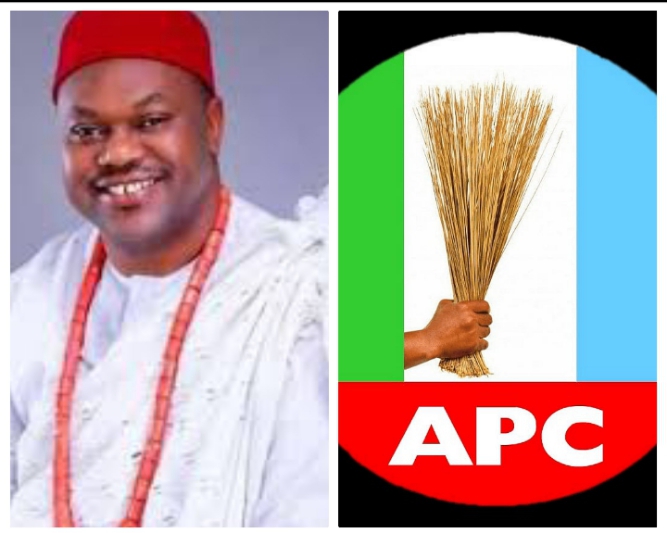
This is where the candidacy of Rt Hon. Victor Ochei becomes not only relevant but compelling.
A former Speaker of the Delta State House of Assembly, Ochei embodies a blend of legislative experience, administrative competence, and grassroots connection. His career has been defined not by political dominance, but by service across multiple sectors. As an engineer, lawyer, and public servant, his intellectual depth is matched by practical engagement. His tenure in the state legislature was marked by strategic empowerment initiatives and a demonstrable commitment to constituency development.
Beyond the legislature, his role at NIMASA and his current position as President of the Nigeria Tennis Federation further underscore a capacity for leadership that transcends politics. These experiences have equipped him with a national outlook and administrative discipline, qualities essential for effective representation at the Senate.
Yet, perhaps Ochei’s most distinguishing attribute is his accessibility. In an era where political office is often perceived as distant and elitist, he has maintained an open-door philosophy that resonates with ordinary citizens. His appeal among youths, women, and grassroots communities is not incidental; it is the product of consistent engagement and inclusive leadership.
The argument, therefore, is not merely about replacing one individual with another. It is about redefining the political trajectory of Delta North. It is about choosing between continuity that risks entrenchment and renewal that promises expansion.
This is not to diminish the contributions of Dr. Okowa, but to recognize that leadership must, at some point, evolve beyond individual dominance. The future of Delta North cannot be built on the foundations of perpetual recycling. It must be anchored on deliberate transition, generational inclusion, and visionary representation.
As 2027 approaches, the people of Delta North are presented with a choice that goes beyond personalities. It is a choice between the comfort of the familiar and the promise of the possible. In Victor Ochei lies a candidacy that reflects not just competence, but the urgency of a new direction.
History will not merely remember who held power, but who had the courage to pass the torch.
